Showing posts with label freedom. Show all posts

Sunday, July 27, 2025

[quotes] Women, Race, and Class - Angela Davis 1981

Women, Race & Class: Davis, Angela Y.: 9780394713519: Amazon.com: Books Angela Davis - Wikipedia

The Legacy of Slavery: Standards for a New Womanhood 

"The slavery system defined Black people as chattel. Since women, no less than men, were viewed as profitable labor-units, they might as well have been genderless as far as the slaveholders were concerned. In the words of one scholar, 'the slave woman was first a full-time worker for her owner, and only incidentally a wife, mother and homemaker.'"

"Expediency governed the slaveholders' posture toward female slaves: when it was profitable to exploit them as if they were men, they were regarded, in effect, as genderless, but when they could be exploited, punished and repressed in ways suited only for women, they were locked into their exclusively female roles." 

"Within the confines of their family and community life, therefore, Black people managed to accomplish a magnificent feat. They transformed that negative equality which emanated from the equal oppression they suffered as slaves into a positive quality: the egalitarianism characterizing their social relations." 

"Black women were equal to their men in the oppression they suffered; they were their men's social equals within the slave community; and they resisted slavery with  passion equal to their men's. This was one of the greatest ironies of the slave system, for in subjecting women to the most ruthless exploitation conceivable, exploitation which knew no sex distinctions, the groundwork was created not only for Black women to assert their equality through their social relations, but also to express it through their acts of resistance." 

The Anti-Slavery Movement and the Birth of Women's Rights

"When manufacturing moved out of the home and into the factory, the ideology of womanhood began to raise the wife and mother as ideals. As workers, women had at least enjoyed economic equality, but as wives, they were destined to become appendages to their men, servants to their husbands. As mothers, they would be defined as passive vehicles for the replenishment of human life. The situation of the white housewife was full of contradictions. There was bound to be resistance." 

"The anti-slavery movement offered women of the middle class the opportunity to prove their worth according to standards that were not tied to their role as wives and mothers. In this sense, the abolitionist campaign was a home where they could be valued for their concrete works."

"They discovered that sexism, which seemed unalterable inside their marriages, could be questioned and fought in the arena of political struggle. Yes, white women would be called upon to defend fiercely their rights as women in order to fight for the emancipation of Black people." 

"But once the male supremacist attacks against them were unleashed, they realized that unless they defended themselves as women - and the rights of women in general - they would be forever barred from the campaign to free the slaves." 

Class and Race in the Early Women's Rights Campaign

"Frederick Douglass was also responsible for officially introducing the issue of women's rights to the Black Liberation movement, where it was enthusiastically welcomed."

"These women - unlike their predecessors, whose families owned land - had nothing to rely upon but their labor power. When they resisted, they were fighting for their right to survive."

"Even the most radical white abolitionists, basing their opposition to slavery on moral and humanitarian grounds, failed to understand that the rapidly developing capitalism of the North was also an oppressive system. They viewed slavery as a detestable and inhuman institution, an archaic transgression to justice. But they did not recognize that the white worker in the North, his or her status as 'free' laborer notwithstanding, was no different from the enslaved 'worker' in the South: both were victims of economic exploitation." 

Racism in the Woman Suffrage Movement

"The assumption that emancipation had rendered the former slaves equal to white women - both groups equally requiring the vote for the completion of their social equality - ignored the utter precariousness of Black people's newly won 'freedom' during the post-Civil War era. While the chains of slavery had been broken, Black people still suffered the pain of economic deprivation and they faced the terrorist violence of racist mobs in a form whose intensity was unmatched even by slavery." 

"In light of widespread violence and terror suffered by Black people in the South, Frederick Dougless' insistence that Black people's need for electoral power was more urgent than that of middle-class white women was logical and compelling. The former slave population was still locked in a struggle to defend their lives - and in Douglass' eyes, only the ballot could ensure their victory." 

"The women's rights leaders of the post-Civil War era tended to view the vote as an end in itself. Already in 1866, it seemed that whoever furthered the cause of woman suffrage, however racist their motives, was a worthwhile recruit for the women's campaign."

The Meaning of Emancipation According to Black Women 

"Men and women alike were arrested and imprisoned at the slightest pretext - in order to be leased out by the authorities as convict laborers. Whereas the slaveholders had recognized limits to the cruelty with which they exploited their 'valuable' human property, no such cautions were necessary for the postwar planters who rented Black convicts for relatively short terms." 89

"As a result, both employers and state authorities acquired a compelling economic interest in increasing the prison population." 89

"This perversion of the criminal justice system was oppressive to the ex-slave population as a whole. But the women were especially susceptible to the brutal assaults of the judicial system. The sexual abuse they had routinely suffered during the era of slavery was not arrested by the advent of emancipation." 

"White women - feminists included - have revealed a historical reluctance to acknowledge the struggles of household workers." 

"The feminist activist was perpetrating the very oppression she protested. Yet her contradictory behavior and her inordinate insensitivity are not without explanation, for people who work as servants are generally viewed as less than human beings. Inherent in the dynamic of the master-servant (or mistress-maid) relationship, said the philosopher Hegel, is the constant striving to annihilate the consciousness of the servant."

Education and Liberation: Black Women's Perspective 

"'knowledge unfits a child to be a slave.'" 100

Women Suffrage at the Turn of the Century: The Rising Influence of Racism

"This conversation between Ida B. Wells and Susan B. Anthony rook place in 1894. Anthony's self-avowed capitulation to racism 'on the ground of expediency' characterized her public stance on this issue until she resigned in 1900 from the presidency of the National American Woman Suffrage Association." 

"The same forces that sought to subjugate the peoples of these countries were responsible for the worsening plight of Black people and the entire US working class. Racism nourished those imperialist ventures and was likewise conditioned by imperialism's strategies and apologetics."

"Had Anthony seriously reflected on the findings of her friend Ida B. Wells, she might have realized that a noncommittal stand on racism implied that lynchings and mass murders by the thousands could be considered a neutral issue." 119

"For years and years, leading suffragists had justified the Association's indifference to the cause of racial equality by invoking the catch-all argument of expediency. Now woman suffrage was represented as the most expedient means to achieve racial supremacy." 

Black Women and the Club Movement 

"Not nearly as many Black women were confronted with the domestic void which plagued their white middle-class sisters." 

Working Women, Black Women and the History of the Suffrage Movement

"Anthony's staunchly feminist position was also a staunch reflection of bourgeois ideology. And it was probably because of the ideology's blinding powers that she failed to realize that working-class women and Black women alike were fundamentally linked to their men by the class exploitation and racist oppression which did not discriminate between the sexes." 142

Communist Women

"Lucy Parsons argued that racism and sexism were overshadowed by the capitalists' overall exploitation of the working class. Since they were victims of capitalist exploitation, said Parsons, Black people and women, no less than white people and men, should devote all their energies to the class struggle... Sex and race, according to Lucy Parsons' theory, were facts of existence manipulated by employers who sought to justify their greater exploitation of women and people of color." 153

Rape, Racism, and the Myth of the Black Rapist

"Slavery relied as much on routine sexual abuse as it relied on the whip and the lash." 175

"It was the unwritten policy of the US Military Command to systematically encourage rape, since it was an extremely effective weapon of mass terrorism." 

"The reliance on rape as an instrument of white-supremacist terror predates by several centuries the institution of lynching. During slavery, the lynching of Black people did not occur extensively - for the simple reason that slaveowners were reluctant to destroy their valuable property. Flogging yes, but lynching, no. Together with flogging, rape was a terribly efficient method of keeping Black women and men alike in check. It was a routine arm of repression." 183

"... for the rape charge turned out to be the most powerful of several attempts to justify the lynching of Black people. The institution of lynching, in turn, complemented by the continued rape of Black women, became an essential ingredient of the postwar strategy of racist terror." 

"Lynchings were represented as a necessary measure to prevent Black supremacy over white people - in other words, to reaffirm white supremacy."

"In a society where male supremacy was all-pervasive, men who were motivated by their duty to defend their women could be excused of any excess they might commit. That their motive was sublime was ample justification for the resulting barbarities." 187

"It seems, in fact, that men of the capitalist class and their middle-class partners are immune to prosecution because they commit their sexual assaults with the same unchallenged authority that legitimizes their daily assaults on the labor and dignity of working people."

Racism, Birth Control, and Reproductive Rights

"Black women have been aborting themselves since the earliest days of slavery. Many slave women refused to bring children into a world of interminable forced labor, where chains and floggings and sexual abuse for women were the everyday condition of life."204

"Their assumption reflected the tendency to blur the distinction between abortion rights and the general advocacy of abortions. The campaign often failed to provide a voice for women who wanted the right to legal abortions while deploring the social conditions that prohibited them from bearing more children." 

"More and more, it was assumed within birth control circles that poor women, Black and immigrant alike, had a 'moral obligation to restrict the size of their families.' What was demanded as a 'right' for the privilege came to be interpreted as a 'duty' for the poor." 210

"By 1932 the Eugenics Society could boast that at least twenty-six states had passed compulsory sterilization laws and that thousands of 'unfit' persons had already been surgically prevented from reproducing."

60-61, 77-83, 88-90, 96-97, 183-187, 205-210

Friday, July 4, 2025

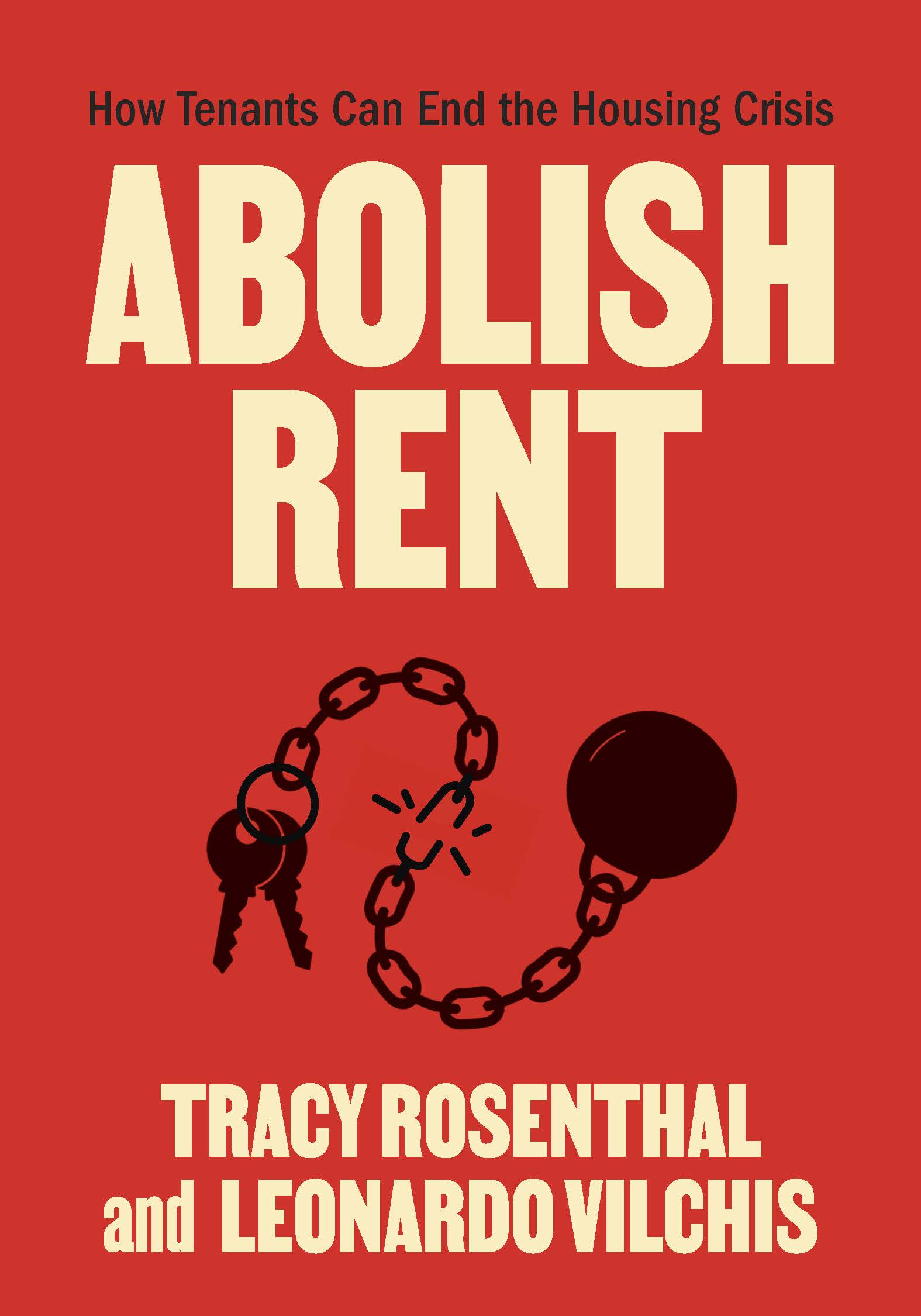
Abolish Rent - Tracy Rosenthal and Leonardo Vilchis 2024

Abolish Rent | HaymarketBooks.org Abolish Rent: A Conversation with the Co-Founders of the Largest Tenants'  Union in the United States Activist-in-Residence | Challenge Inequality

"The frame of 'housing crisis' trains our attention away from the fundamental power imbalance between landlords and tenants. It suggests that to solve the crisis, we should focus on the people who design housing, who build housing, who profit from housing, not the people who live in it. It encourages us to think about abstract, fungible 'housing units' and not about power, or about people and the constraints that shape their lives." 

"'All housing is public housing,' as David Madden and Peter Marcuse put it. Public investment is a precondition for private profit. Even what we think of as privately owned housing relies on vast public infrastructure to exist. That physical infrastructure includes the pipes that deliver water, the sewers that carry out waste, the sidewalks, roads, and transportation systems that connect our housing to our neighborhoods and our neighborhoods to each other. Public infrastructure also means legal and financial systems, from the contracts that govern leases, to the regulations that dictate everything from what counts as a bedroom to the terms of financing loans. The private housing market could not exist without the support of the state."

"Theirs is a view of tenant power as a by-product of market forces: like a low unemployment rate, which gives workers more leverage, incentivizing bosses to improve conditions and raise pay, a higher vacancy rate would give tenants more choice, motivating landlords to make repairs and ease rent increases. But just as tight labor market has never eliminated deadly jobs or poverty wages, a slack housing market will not eradicate slum housing or rent gouging. Indeed, it was organized labor unions that won wage floors, weekends, and safety regulations; no basic worker protection or benefit has been handed over as a gift from 'job creators.'"

"To protect their right to profit from housing, the industry consistently framed their attacks as a defense against communism. Robert Gerholz, president of the National Home Builders, threatened that public housing would allow the US to 'be precipitated into a socialist state.'"

"As Hoyt once put it, 'Communism can never win in a nation of homeowners.' By blocking a federal guarantee to a dignified home, the real estate industry forced most tenants to turn to the private market." 

"By the eighties, shaped in turns by inflation, tax revolt, racism, and the red scare, Republicans had invented the housing programs that make up the overwhelming bulk of the government response to the housing question today, in which support for tenants ends up benefiting landlords and real estate developers... Rather than challenge the power of landlords and developers to extract rents, these programs hand over our tax dollars to shore up private profits."

"The decline of public housing was timed with the expansion of another institution of publicly funded housing for the poor: prisons - public housing as public warehousing." 

"Like the horticultural metaphor of 'urban blight' that figures dilapidation as disease, the theory smears the quality of tenants' neighborhoods into the character of tenants themselves. It suggests that buildings in poor condition are not evidence of historical segregation and disinvestment - the decisions of landowners and governments - but evidence of residents' criminality." 

"The role of municipal governance continued to shift from providing services to existing residents to growing their economies and expanding their tax bases. Municipalities perform that role by courting new, richer residents as well as real estate speculators." 

"Who should we look to for help to dismantle the real estate regime? What levers do we have? What threat do we pose? 'What can we do today so that we can do tomorrow what we cannot do today?'"

"Putting a face and a name on the landlord turned the struggle against an impersonal process of gentrification into a struggle against a would-be evictor, who could no longer hide from personal responsibility for - and personal benefit from - the tenants' removal." 

"They learned about the warranty of habitability, implied in most every state and enshrined in California, which ties a tenants' obligation to pay rent to a property's livability: an apartment free of pests and structural issues, heat that heats, lights that light, drains that drain. Withholding rent is often legally protected if basic living standards are not met." 

"This is clear from the Mariachi's collective action: Those who couldn't pay and those who could decided to join together, organizing to withhold a majority of the rent roll for the building. The association turned withholding rent into a ritual, turning over their rent checks or money orders to be stored by the union each month." 

"Landlord stakeholders claim their property taxes are their contributions to the public good, but it is we who pay our landlords' property taxes." 

"A tenants union treats tenants as experts in their own experience and as agents of the changes we need. Who builds a tenants union? We do. Who is it for? Us. A union allows tenants to claim collective control of our housing and our lives." 

"By reclaiming the common space of our buildings and our blocks, we assert ourselves as the stewards of the places where we live. We educate ourselves, acting our way into thinking and archiving past tactics to build an arsenal for the future." 

"Enacting the principle of small-d democracy - people's self-governance - the tenants union is an instrument to produce small-c communism - collective control over our housing, our land, and our lives." 

"The union builds community to overcome this sense of disempowerment, to testify to our ongoing presence in our neighborhoods, to bolster our sense of control over our lives. When we act together in solidarity, we solidify the bonds gentrification breaks." 

"So many systems protect landlords from having to encounter the consequences of their actions, from the LLCs that anonymize their identities to the physical distance that separates their homes from ours." 

"And, as we know from living in broken-down apartments in cities with habitability laws on the books, what laws we win are only as good as their enforcement." 

"Similarly, when we reclaim shared spaces - hold association meetings in our lobbies, grow plants in our backyards, repair our sidewalks, clean our alleys, block traffic to host a union party on our street - we occupy our buildings, our neighborhoods, and the city." 

"How do you resolve the tension between the emergency we are living through and the fact that the only tools we have to work with - organizing and collective action - take so much time?... The union is what makes it possible to continue in the face of all the conditions that made it seem like the rational thing to do would be to give up." 

"Aligned with property values rather than human rights, city agencies conspired against residents of Echo Park Lake by denying or removing services. As public-records requests revealed, Chief Park Ranger Joe Losorelli had helped deny the park access to a hygiene trailer with showers, lest it become 'another Occupy LA.'"

"Housing without autonomy is internment."

"During an attempt at mediation, the landlord told the city attorney's office that he'd drop his tenants' evictions provided they stop their events. He said the tenants association's movie nights, chapter meetings, and food distribution were as threatening to him as eviction notices. Those communal gatherings are not outwardly aggressive actions, but, in a way, he is right: taking away his ability to turn their neighbors against them, building support for emergency response, those actions grow the power of tenants." 


Tuesday, May 27, 2025

[quotes] Pedagogy of the Oppressed - Paulo Freire 1968

Pedagogy of the Oppressed: 50th Anniversary Edition: Freire, Paulo, Macedo,  Donaldo: 9781501314131: Amazon.com: Books Paulo Freire - Wikiquote

"The term conscientização refers to learning to perceive social, political, and economic contradictions, and to take action against the oppressive elements of reality." 

"The rightist sectarian differs from his or her leftist counterpart in that the former attempts to domesticate the present so that (he or she hopes) the future will reproduce this domesticated present, while the latter considers the future pre-established - a kind of inevitable fate, fortune, or destiny." 

"The radical, committed to human liberation, does not become the prisoner of a 'circle of certainty within which reality is also imprisoned.' On the contrary, the more radical the person is, the more fully he or she enters into reality so that, knowing it better, he or she can better transform it."

"From these pages I hope at least the following will endure: my trust in the people, and my faith in men and women, and in the creation of a world in which it will be easier to love."

"The struggle for humanization, for the emancipation of labor, for the overcoming of alienation, for the affirmation of men and women as persons would be meaningless. This struggle is possible only because dehumanization, although a concrete historical fact, is not a given destiny but the result of an unjust order that engenders violence in the oppressors, which in turn dehumanizes the oppressed." 

"This, then, is the great humanistic and historical task of the oppressed: to liberate themselves and their oppressors as well." 

"True generosity consists precisely in fighting to destroy the causes which nourish false charity. False charity constrains the fearful and subdued, the 'rejects of life,' to extend their trembling hands. True generosity lies in striving so that these hands - whether of individuals or entire peoples - need be extended less and less in supplication, so that more and more they become human hands which work and, working, transform the world.

"They will not gain this liberation by chance but through the praxis of their quest for it, through their recognition of the necessity to fight for it. And this fight, because of the purpose given it by the oppressed, will actually constitute an act of love opposing the lovelessness which lies at the heart of the oppressors' violence, lovelessness even when clothed in false generosity." 

"It is a rare peasant who, once 'promoted' to overseer, does not become more of a tyrant towards his former comrades than the owner himself. This is because the context of the peasant's situation, that is, oppression, remains unchanged." 

"One of the basic elements of the relationship between oppressor and oppressed is prescription. Every prescription represents the imposition of one individual's choice upon another ,transforming the consciousness of the person prescribed to into one that conforms with the prescriber's consciousness. Thus, the behavior of the oppressed is a prescribed behavior, following as it does the guidelines of the oppressor. The oppressed, having internalized the image of the oppressor and adopted his guidelines, are fearful of freedom. Freedom would require them to eject this image and replace it with autonomy and responsibility." 

"... the oppressor, who is himself dehumanized because he dehumanizes others, is unable to lead this struggle." 

"However, the oppressed, who have adapted to the structure of domination in which they are immersed, and have become resigned to it, are inhibited from waging the struggle for freedom so long as they feel incapable of running the risks it requires. Moreover, their struggle for freedom threatens not only the oppressor, but also their own oppressed comrades who are fearful of still greater repression." 

"They prefer gregariousness to authentic comradeship; they prefer the security of conformity with their state of unfreedom to the creative communion produced by freedom and even the very pursuit of freedom." 

"The oppressed suffer from the duality which has established itself in their innermost being. They discover that without freedom they cannot exist authentically. Yet, although they desire authentic existence, they fear it. they are at one and the same time themselves and the oppressor whose consciousness they have internalized. The conflict lies in the choice between being wholly themselves or being divided; between ejecting the oppressor within or not ejecting them; between human solidarity or alienation; between following prescriptions or having choices; between being spectators or actors; between acting or having the illusion of acting through the action of the oppressors; between speaking out or being silent, castrated in their power to create and re-create, in their power to transform the world. This is the tragic dilemma of the oppressed which their education must take into account.

"In order for the oppressed to be able to wage the struggle for their liberation, they must perceive the reality of oppression not as a closed world from which there is no exit, but as a limiting situation which they can transform." 

"Hence, the radical requirement - both for the individual who discovers himself or herself to be an oppressor and for the oppressed - that the concrete situation which begets oppression must be transformed." 

"One of the gravest obstacles to the achievement of liberation is that oppressive reality absorbs those within it and thereby acts to submerge human beings' consciousness. Functionally, oppression is domesticating. To no longer be prey to its force, one must emerge from it and turn upon it. This can be done only by means of the praxis: refection and action upon the world in order to transform it.

"The pedagogy of the oppressed, which is the pedagogy of people engaged in the fight for their own liberation, has its roots here... The oppressed must be their own example in the struggle for their redemption. The pedagogy of the oppressed, animated by authentic, humanist (not humanitarian) generosity, presents itself as a pedagogy of humankind. Pedagogy which begins with the egoistic interests of the oppressors (an egoism cloaked in the false generosity of paternalism) and makes the oppressed the objects of its humanitarianism, itself maintains and embodies oppression."

"There would be no oppressed had there been no prior situation of violence to establish their subjugation... This violence, as a process, is perpetuated from generation to generation of oppressors, who become its heirs and are shaped in its climate." 

"But even when the contradiction is resolved authentically by a new situation established by the liberated laborers, the former oppressors do not feel liberated. On the contrary, they genuinely consider themselves to be oppressed. Conditioned by the experience of oppressing others, any situation other than their former seems to them like oppression."  

"For the oppressors, what is worthwhile is to have more - always more - even at the cost of the oppressed having less or having nothing. For them, to be is to have and to be the class of the 'have.' The oppressors do not perceive their monopoly on having more as a privilege which dehumanizes others and themselves. They cannot see that, in the egoistic pursuit of having as a possessing class, they suffocate in their own possessions and no longer are; they merely have. For them, having more is an inalienable right, a right they acquired through their own 'effort,' with their 'courage to take risks.'"

"... trusting the people is the indispensable precondition for revolutionary change. A real humanist can be identified more by his trust in the people, which engages him in their struggle, than by a thousand actions in their favor without that trust."

"The insistence that the oppressed engage in reflection on their concrete situation is not a call to armchair revolution. On the contrary, reflection - true reflection - leads to action. On the other hand, when the situation calls for action, that action will constitute an authentic praxis only if its consequences become the object of critical reflection. In this sense, the praxis is the new raison d'etre of the oppressed; and the revolution, which inaugurates the historical moment of this raison d'etre, it not viable apart from their concomitant conscious involvement. Otherwise, action is pure activism.

"The correct method for a revolutionary leadership to employ in the task of liberation is, therefore, not 'libertarian propaganda.' Nor can the leadership merely 'implant' in the oppressed a belief in freedom, thus thinking to win their trust. The correct method lies in dialogue. The conviction of the oppressed that they must fight for their liberation is not a gift bestowed by the revolutionary leadership, but the result of their own conscientização."

chapter 2

"This is the 'banking' concept of education, in which the scope of action allowed to the students extends only as far as receiving, filing, and storing the deposits."

"Indeed, the interests of the oppressors lie in 'changing the consciousness of the oppressed, not the situation which oppresses them'; for more the oppressed can be led to adapt to that situation, the more easily they can be dominated."  

"Those who use the banking approach, knowingly or unknowingly, fail to perceive that the deposits themselves contain contradictions about reality. But, sooner or later, these contradictions may lead formerly passive students to turn against their domestication and the attempt to domesticate reality. They may discover through existential experience that their present way of life is irreconcilable with their vocation to become fully human. They may perceive through their relations with reality that reality is really a process, undergoing constant transformation. If men and women are searchers and their ontological vocation is humanization, sooner or later they may perceive the contradiction in which banking education seeks to maintain them, and then engage themselves in the struggle for their liberation." 

"It follows logically from the banking notion of consciousness that the educators' role is to regulate the way the world 'enters into' the students. The teacher's task is to organize a process which already occurs spontaneously, to 'fill' students by making deposits of information which he or she considers to constitute true knowledge... The educated individual is the adapted person, because he or she is better 'fit' for the world." 

"Liberation is a praxis: the action and reflection of men and women upon their world in order to transform it. Those truly committed to the cause of liberation can accept neither the mechanistic concept of consciousness as an empty vessel to be filled, not the use of banking methods of domination (propaganda, slogans - deposits) in the name of liberation." 

"The role of the problem-posing educator is to create; together with the students, the conditions under which knowledge at the level of the doxa is superseded by true knowledge, at the level of the logos."

"Education as the practice of freedom - as opposed to education as the practice of domination - denies that man is abstract, isolated, independent, and unattached to the world; it also denies that the world exists as a reality apart from people."

"In problem-posing education, people develop their power to perceive critically the way they exist in the world with which and in which they find themselves; they come to see the world not as a static reality, but as a reality in process, in transformation... it is also true that the form of action they adopt is to a large extent a function of how they perceive themselves in the world." 

"Problem-posing education affirms men and women as beings in the process of becoming - as unfinished, uncompleted beings in and with a likewise unfinished reality... The banking method emphasizes permanence and becomes reactionary; problem-posing education - which accepts neither a 'well-behaved' present not a predetermined future - roots itself in the dynamic present and becomes revolutionary."  

"Any situation in which some individuals prevent others from engaging in the process of inquiry is one of violence. The means used are not important; to alienate human beings from their own decision-making is to change them into objects."

chapter 3

"Dialogue cannot exist, however, in the absence of a profound love for the world and for people." 

"As an act of bravery, love cannot be sentimental; as an act of freedom, it must not serve as a pretext for manipulation. It must generate other acts of freedom; otherwise, it is not love. Only by abolishing the situation of oppression is it possible to restore the love which that situation made impossible. If I do not love the world - if I do not love life - if I do not love people - I cannot enter into dialogue."

"At the point of encounter there are neither utter ignoramuses nor perfect sages; there are only people who are attempting together, to learn more than they now know." 

"Dialogue further requires an intense faith in humankind, faith in their power to make and remake, to create and re-create, faith in their vocation to be more fully human (which is not the privilege of an elite, but the birthright of all). Faith in people is an a priori requirement for dialogue; the 'dialogical man' believes in others even before he meets them face to face."

"For the dialogical, problem-posing teaher-student, the program content of education is neither a gift nor an imposition - bits of information to be deposited in the students - but rather the organized, systematized, and developed 're-presentation' to individuals of the things about which they want to know more."

"The oppressors are the ones who act upon the people to indoctrinate them and adjust them to a reality which must remain untouched."

"It is not our role to speak to the people about our own view of the world, nor to attempt to impose that view on them, but rather to dialogue with the people about their view and ours. We must realize that their view of the world, manifested variously in their action, reflects their situation of the world. Educational and political action which is not critically aware of this situation runs the risk either of 'banking' or of preaching in the desert."

"Often, educators and politicians speak and are not understood because their language is not attuned to the concrete situation of the people they address... In order to communicate effectively, educator and politician must understand the structural conditions in which the thought and language of the people are dialectically framed."

"... as they locate the seat of their decisions in themselves and in their relations with the world and others, people overcome the situations which limit them: the 'limit situations.'"

"Confronted by this 'universe of themes' in dialectical contradiction, persons take equally contradictory positions: some work to maintain the structures, others to change them. As antagonism deepens between the themes which are the expression of reality, there is a tendency for the themes and for reality itself to be mythicized, establishing a climate or irrationality and sectarianism."

"In sum, limit-situations imply the existence of persons who are directly or indirectly served by these situations, and of those who are negated and curbed by them. Once the latter come to perceive these situations as the frontier between being and being more human, rather than the frontier between being and nothingness, they begin to direct their increasingly critical actions towards achieving the untested feasibility implicit in that perception. On the other hand, those who are served by the present limit-situation regard the untested feasibility as a threatening limit-situation which must not be allowed to materialize, and act to maintain the status quo." 

"Human beings are because they are in a situation. And they will be more the more they not only critically reflect upon their existence but critically act upon it."

"The task of the dialogical teacher in an interdisciplinary team working on the thematic universe revealed by their investigation is to 're-present' that universe to the people from whom she or he first received it - and 're-present' it not as a lecture, but as a problem." 

"The important thing, from the point of view of libertarian education, is for the people to come to feel like masters of their thinking by discussing the thinking and views of the world explicitly or implicitly manifest in their own suggestions and those of their comrades."

chapter 4

"The revolution is made neither by the leaders for the people, nor by the people for the leaders, but by both acting together in unshakable solidarity."

"Authentic revolution attempts to transform the reality which begets this dehumanizing state of affairs."

"We can legitimately say that in the process of oppression someone oppresses someone else; we cannot say that in the process of revolution someone liberates someone else, nor yet that someone liberates himself, but rather that human beings in communion liberate each other."

"Although they may legitimately recognize themselves as having, due to their revolutionary consciousness, a level of revolutionary knowledge different from the level of empirical knowledge held by the people, the cannot impose themselves and their knowledge on the people. They cannot sloganize the people, but must enter into dialogue with them, so that the people's empirical knowledge of reality, nourished by the leader's critical knowledge, gradually becomes transformed into knowledge of the causes of reality."

"It is necessary for the oppressors to approach the people in order, via subjugation, to keep them passive. This approximation, however, does not involve being with the people, or require true communication. It is accomplished by the oppressors' depositing myths indispensable to the preservation of the status quo: for example, the myth that the oppressive order is a 'free society.'"

"All these myths (and others the readers could list), the internalization of which is essential to the subjugation of the oppressed, are presented to them by well-organized propaganda and slogans, via the mass 'communications' media - as if such alienation constituted real communication."

"One of the characteristics of oppressive cultural action which is almost never perceived by the dedicated but naive professionals who are involved is the emphasis on a focalized view of problems rather than on seeing them as dimensions of a totality."

"By means of manipulation, the dominant elites try to conform the masses to their objectives. And the greater the political immaturity of these people (rural or urban) the more easily the latter can be manipulated by those who do not wish to lose their power."

"Manipulation, like the conquest whose objectives it serves, attempts to anesthetize the people so they will not think."

"One of the methods of manipulation is to inoculate individuals with the bourgeois appetite for personal success." 

"In [cultural invasion], the invaders penetrate the cultural context of another group, in disrespect of the latter's potentialities; they impose their own view of the world upon those they invade and inhibit the creativity of the invaded by curbing their expression."

"The more the invasion is accentuated and those invaded are alienated from the spirit of their own culture and from themselves, the more the latter want to be like the invaders: to walk like them, dress like them, talk like them."

"Homes and schools exist not in the abstract, but in time and space. Within the structures of domination they function largely as agencies which prepare the invaders of the future."

"Internalizing paternal authority through the rigid relationship structure emphasized by the school, these young people tend when they become professionals to repeat the rigid patterns in which they were miseducated. This phenomenon, in additional to their class position, perhaps explains why so many professionals adhere to anti-dialogical action. Whatever the specialty that beings them into contact with the people, they are almost unshakable convinced that it is their mission to 'give' the latter their knowledge and techniques."

"In order to determine whether or not a society is developing, one must go beyond criteria based on indices of 'per capita' income as well as those which concentrate on the study of gross income. The basic, elementary criterion is whether or not the society is a 'being for itself.' If it is not, the other criteria indicate modernization rather than development."

"If at a certain historical moment the oppressed, for the reasons previously described, are unable to fulfill their vocation as Subjects, the posing of their very oppression as a problem will help them achieve this vocation."

"... just as the oppressor, in order to oppress, needs a theory of oppressive action, so the oppressed, in order to become free, also need a theory of action."


Wednesday, February 7, 2024

[quotes] They Called Me a Lioness: A Palestinian Girl's Fight for Freedom - Ahed Tamimi and Dena Takruri 2022


"Revolution, they believed, required first and foremost a level of consciousness, not just strategies for fighting or protesting. They raised people's consciousness through holding teach-ins and putting on cultural events."

"'if you uproot an olive tree, we'll plant one hundred instead!'"

"If I was successful in life but my success didn't help Palestine, then it wasn't truly a success. They planted this seed in us while we were very young, but even if they didn't, everything I had witnessed from a young age would have been enough to make the liberation of Palestine the main goal of my life."

"While I believe that it's the right of all colonized, occupied, and oppressed people to stand up to their oppressors, I've always been convinced that staying alive and conveying our message through unarmed resistance is more powerful and strategic than our dying. I can't serve the Palestinian cause if I'm dead."

"'Thank you for your tears,' I began. 'But I don't want your sadness. Nor do I want your money. Please save that for the people in your own country who need it."

"The election of Donald Trump as president of the United States was one of the worst things to happen to the Palestinian people in recent years."

"'I want to teach you all a course on international law and international humanitarian law, so you truly benefit from your time here by learning your rights and expanding your political consciousness.'"

"My time in her classroom is one of the many reasons I've never viewed this chapter of my life as a loss. In prison, I learned the virtue of patience, something I had always struggled with before. And in prison, instead of putting my own comfort and desires first, I learned how to be in a group and always fight for the interest of the collective."

"By their examples, Khalida and Khalto Yasmeen had taught me how to be a strong woman who advocated for herself and spoke truth to power. They had helped me understand the critical role women play in our society and in our struggle for liberation. Women make up half of society, and they raise the whole of it."

Sunday, December 31, 2023

[quotes] Carceral Capitalism - Jackie Wang 2018


"Prisons and law enforcement may actually grow when the ideology of small government is hegemonic because the maintenance of law and order is considered the proper (morally authorized) domain of government. For Bernard E. Harcourt, neoliberal penality is rooted in 'the assumption of government legitimacy and competence in the penal arena and, on the other hand, the presumption that the government should not play a role elsewhere.'"

"Thus, as growth in the 'real' economy remains low, in our perverted debt economy, falsely categorizing borrowers as delinquent has become a financial opportunity in itself."

"All of this to say that a vast number of humans - whether they are laborers or soldiers - may become superfluous, though they my still be needed (for now at least) as users and consumers."

"This antagonistic relationship to production also redefines how the People's War is waged: rather than seizing the means of production, Jackson emphasized the destruction of the protective and productive forces."

"Law itself is a construction designed specifically to manage 'poor, desperate people like me.'"

"Will these credit instruments and the 'discipline of the free market' reduce our lives to the acquisition of 'marketable skills' and make it impossible to explore, wander, create, invent, learn (as opposed to 'acquiring skills'), relax, form non-instrumentalized social bonds, loaf, and daydream? Without a revolution or a social movement to overturn or counter the direction of the debt economy and techno-capitalism, we might be catapulted into a future where our lives are disciplined and determined by our dependency on credit."

"But what exactly is primitive accumulation? It entails the creation of a labor market and a system of private property achieved through the violent process of dispossessing people of their land and ways of life so that they can be converted into workers for capitalists. In order to turn peasants, small craftsmen, and others into workers who have nothing to sell but their labor power, these people must first be alienated from their means of subsistence."

"1) Capitalism is inherently expansionary, as it seeks to realize an ever-increasing amount of surplus value; 2) There is no reason why surplus value need be realized within the formal capitalist sphere when realization can be secured through violence, state force, colonization, militarism, war, the use of international credit to promote the interests of the hegemonies, the expropriation of indigenous land, predatory tariffs and taxes, hyper-exploitation, and the pilfering of the public purse."

"Harvey agrees with Luxemburg's claim that capitalism has a dual character: one sphere is governed by freedom of contract and the rule of law while the other is dominated by political violence and looting carried out by hegemonic capitalist nations. The looting component of the accumulation process is often carried out through the international credit system, which Harvey notes is the linchpin of late capitalism."

"To accept risk scores as an index of personal competency is to embrace a liberal politics of personal agency, where those who work hard to maintain good credit get what they deserve."

"The idea that people have a moral obligation to make good on their promise to pay their debts is partly tied to the idea that freedom means personally bearing the risks of your actions and decisions."

"A generation - financiers, abolitionists, actuaries, jurists, preachers, legislators, corporate executives, philosophers, social scientists - developed a vision of freedom that linked the liberal ideal of self-ownership to the personal assumption of 'risk.'" - Freaks of Fortune, Jonathan Levy

"the credit system is legitimized by the moral framework that shapes our understanding of debt - whereby the creditor is framed as benevolent while the struggling debtors are viewed as lazy or irresponsible for defaulting on their loans. However, as lending practices become more predatory, this moral framework is at risk of unraveling."

"The financialization of municipalities, the loss of key tax revenue streams, deindustrialization, and capital flight are the causes of the fiscal crisis - not reckless public spending. The situation has led to the development of socially deleterious methods of revenue extraction that target vulnerable populations, particularly poor black Americans."

"However, I want to emphasize that the state is no ordinary borrower; it is a borrower endowed with the legal power to loot the public to pay back its creditors."

"... a municipality's financial standing (or its credit-worthiness) is partly tied to its ability to remain solvent by using the police power and court system to extract revenue from citizens."

"The kapitalistate framework also posits that two primary functions of the state in a capitalist society are to facilitate the accumulation process and to legitimize capitalism."

"Foucault asserts that biopolitical forms of power target the 'aleatory,' unpredictable, and potentially destabilizing elements of a population for the sake of keeping the whole population in balance."

"Foucault puts it bluntly when he says, 'In a normalizing society, race or racism is the precondition that makes killing acceptable... Once the State functions in the biopower mode, racism alone can justify the murderous function of the State.'" - Society Must be Defended

"It's as though in order to come to any recognition of common humanity, the other must be assimilated, meaning in this case, utterly displaced and effaced: 'Only if I can see myself in that position can I understand the crisis of that position.' That is the logic of the moral and political discourses we see every day - the need for the innocent black subject to be victimized by a racist state in order to see the racism of the racist state."

"For Gilmore, the problem 'is not to figure out how to determine or prove the innocence of certain individuals or certain classes of people, but to attack the general system through which criminalization proceeds.'"

"The media construction of urban ghettos and prisons as 'alternate universes' marks them as zones of unintelligibility, faraway places removed from the everyday white experience. Native American reservations are another example of 'void' zones that white people can only access through the fantasy of media representations. Whatever happens in these zones of abjection and vulnerability does not typically register in the white imaginary. In the instance that an 'injustice' does not register, it will have to be translated into more comprehensible terms."

"Morally ennobled victimization has become the necessary precondition for determining which grievances we are willing to acknowledge and authorize."

"Surviving gendered violence does not make the survivor incapable of perpetuating other forms of violence... That does not mean delegitimizing the claims made by survivors, but rather, rejecting the framework of innocence, examining each situation closely, and remaining cognizant of the multiple power struggles at play in different conflicts."

"I see this rejection of collective forms of organizing - and the unwillingness to think beyond the individual as the foundational political unit - as part of a historical shift from queer liberation to queer perfomativity that coincides with the advent of neoliberalism and the 'Care of the Self'- style 'politics' of choice."

"Safety requires the removal and containment of people deemed to be threats. White civil society has a psychic investment in the erasure and abjection of bodies onto which they project hostile feelings, allowing them peace of mind amidst the state of perpetual violence."

"The insistence on innocence results in a refusal to hear those labeled guilty or defined by the state as 'criminals.'"

"When we build politics around standards of legitimate victimhood that require passive sacrifice, we will build a politics that requires a dead black boy to make its point."

"But what if - instead of reacting to these charges with counterarguments that persuasively demonstrate that the abolitionist position is the only sensible position - we instead strategically use these charges themselves as points of departure to show how the prison itself is a problem for thought that can only be unthought using a mode of thinking that does not capitulate to the realism of the Present?"

"When we act in accordance with the prophetic dream, the dream comes to directly constitute reality."

"Our bodies are not closed loops. We hold each other and keep each other in time by marching, singing, embracing, breathing. We synchronize our tempos so we can find a rhythm through which the urge to live can be expressed, collectively. And in this way, we set the world into motion. In this way, poets become the timekeepers of the revolution."

Friday, December 22, 2023

[quotes] The Undercommons: Fugitive Planning and Black Study - Stefano Harney and Fred Moten 2013


“Debt, as Harney puts is, presumes a kind of individualized relation to a naturalized economy that is predicated upon exploitation” 

“we cannot be satisfied with the recognition adn acknowledgement generated by the very system that denies a) that anything was ever broken and b) that we deserved to be the broken part; so we refuse to ask for recognition and instead we want to take apart, dismantle, tear down the structure that, right now, limits our ability to find each other, to see beyond it and to access the places that we know lie outside its walls” 

“In order to bring colonialism to an end then, one does not speak truth to power, one has to inhabit the crazy, nonsensical, ranting language of the other, the other who has been rendered nonentity by colonialism. Indeed, blackness, for Moten and Harney by way of Fanon, is the willingness to be in the space that has been abandoned by colonialism, by rule, by order.”

“when we listen to music, we must refuse the idea that music happens only when the musician enters and picks up an instrument; music is also the anticipation of the performance and the noises of appreciation it generates and the speaking that happens through and around it, making it and loving it, being in it while listening.”

“no one will really be able to embrace the mission of tearing this shit down until they realize that the structures they oppose are not only bad for some of us, they are bad for all of us.”

“If there is no church in the wild, if there is study rather than knowledge production, if there is a way of being together in brokenness, if there is an undercommons, then we must all find our way to it.”

“Critique lets us know that politics is radioactive, but politics is the radiation of critique.”

“We owe it to each other to falsify the institution, to make politics incorrect, to give the lie to our own determination. We owe each other the indeterminate. We owe each other everything.”

“In fact, there is no state theory in public administration programs in the United States. Instead, the state is regarded as the proverbial devil we know. And whether it is understood in public administration as a necessary evil, or as a good that is nonetheless of limited usefulness and availability, it is always entirely knowable as an object. Therefore it is not so much that these programs are set against themselves. It is rather that they are set against some students, particularly those who come to public administration with a sense of what Derrida has called a duty beyond duty, or a passion.”

“Any attempt at passion, at stepping out of this skepticism of the known into an inadequate confrontation with what exceeds it and oneself, must be suppressed by this professionalization.”

“The state, the economy, and civil society may change size or shape, labor may enter or exit, and ethical consideration may vary, but these objects are both positivistic and normative, standing in discrete, spatial arrangement each to the other.”

“Perhaps then it needs to be said that the crack dealer, terrorist, and political prisoner share a commitment to war, and society responds in kind with wars on crime, terror, drugs, communism.”

“perhaps more universities promote more jails. Perhaps it is necessary finally to see that the university produces incarceration as the product of its negligence.”

“The university, then, is not the opposite of prison, since they are both involved in their way with the reduction and command of the social individual.”

“What is, so to speak, the object of abolition? Not so much the abolition of prisons but the abolition of a society that could have prisons, that could have slavery, that could have the wage, and therefore not abolition as the elimination of anything but abolition as the founding of a new society.”

“The anoriginary drive and the insistences it calls into being and moves through, that criminality that brings the law online, the runaway anarchic ground of unpayable debt and untold wealth, the fugal, internal world theater that shows up for a minute serially - poor but extravagant as opposed to frugal - is blackness which must be understood in its ontological difference from black people who are, nevertheless, (under)privileged insofar as they are given (to) an understanding of it.”

“Whom do we mean when we say ‘there’s nothing wrong with us’? The fat ones. The ones who are out of all compass however precisely they are located. The ones who are not conscious when they listen to Les McCann. The Screamers who don’t say much, insolently. The churchgoers who value impropriety. The ones who manage to evade self-management in the enclosure. The ones without interest who bring the muted noise and mutant grammar of the new general interest by refusing. The new general intellect extending the long, extra-genetic line of extra-moral obligation to disturb and evade intelligence. Our cousins. All our friends.”

“The Soviets used to say that the United States had free speech but no one could hear you over the noise of the machines.”

“The NGO is the research and development arm of governance finding new ways to bring to blackness what it is said to lack, the thing that cannot be brought, interests.”

“When governance is understood as the criminalisation of being without interests, as a regulation brought into being by criminality, where criminality is the excess left from criminalisation, a certain fragility emerges, a certain limit, an uncertain imposition by a greater drive, the mere utterance of whose name has again become too black, too strong altogether.”

“Credit is a means of privatization and debt a means of socialisation. So long as they pair in the monogamous violence of the home, the pension, the government, or the university, debt can only feed credit, debt can only desire credit.”

“Governance only works when you work, when you tell us your interests, when you invest your interests again in debt and credit. Governance is the therapy of your interests, and your interests will bring your credit back. You will have an investment, even in debt.”

“The student with interests can demand policies, can formulate policy, give herself credit, pursue bad debtors with good policy, sound policy, evidence-based policy. The student with credit can privatize her own university. The student can start her own NGO, invite others to identify their interests, put them on the table, join the global conversation, speak for themselves, get credit, manage debt. Governance is interest-bearing. Credit and debt. There is no other definition of good governance, no other interest. The public and private in harmony, in policy, in pursuit of bad debt, on the trail of fugitive publics, chasing evidence of refuge. The student graduates.”

“What we are calling policy is the new form command takes as command takes hold.”

“Policy is thus arrayed in the exclusive and exclusionary uniform/ity of contingency as imposed consensus, which both denies and at the very same time seeks to destroy the ongoing plans, the fugitive initiations, the black operations, of the multitude.”

“As resistance from above, policy is a new class phenomenon because the act of making policy for others, of pronouncing others as incorrect, is at the same time an audition for a post-fordist economy that deputies believe rewards those who embrace change but which, in reality, arrests them in contingency, flexibility, and that administered precarity that imagines itself to be immune from what Judith Butler might call our undercommon precariousness. This economy is powered by constant and automatic insistence upon the externalisation of risk, the placement at an externally imposed risk of all life, so that work against risk can be harvested without end.”

“Policy is the form that opportunism takes in this environment, as the embrace of the radically extra-economic, political character of command today… It is a demonstration designed to separate you from others, in the interest of a universality reduced to private property that is not yours, that is the fiction of your own advantage… its ability to see the future of its own survival in this turmoil against those who cannot imagine surviving in this turmoil… Every utterance of policy, no matter its intent or content, is first and foremost a demonstration of one’s ability to be close to the top in the hierarchy of the post-fordist economy.”

“Policy is correction, forcing itself with mechanical violence upon the incorrect, the uncorrected, the ones who do not know to seek their own correction.”

“Governance, despite its own hopes for a universality of exclusion, is for the inducted, for those who know how to articulate interests disinterestedly, those who vote and know why they vote (not because someone is black or female but because he or she is smart), who have opinions and want to be taken seriously by serious people.”

“Policy’s vision is to break it up then fix it, move it along by fixing it, manufacture ambition and give it to your children. Policy’s hope is that there will be more policy, more participation, more change.”

“To work today is to be asked, more and more, to do without thinking, to feel without emotion, to move without friction, to adapt without question, to translate without pause, to desire without purpose, to connect without interruption.”

“Traditionally strategy led and logistics followed. Battle plans dictated supply lines. No more. Strategy, traditional ally and partner of logistics, is today increasingly reduced to collateral damage in the drive of logistics for dominance. In war without end, war without battles, only the ability to keep fighting, only logistics, matters.”

“Modern logistics is founded with the first great movement of commodities, the ones that could speak. It was founded in the Atlantic slave trade, founded against Atlantic slaves.”

“Blackness is the site where absolute nothingness and the world of things converge. Blackness is fantasy in the hold and Wilderson’s access to it is in that he is one who has nothing and is, therefore, both more and less than one. He is the shipped. We are the shipped, if we choose to be, if we elect to pay an unbearable cost that is inseparable from an incalculatble benefit.”

“Hapticality, the capacity to feel through others, for others to feel through you, for you to feel them feeling you, this feel of the shipped is not regulated, at least not successfully, by a state, a religion, a people, an empire, a piece of land, a totem.”

“There’s a touch, a feel you want more of, which releases you.”

“What is we thought of the experiment of the hold as the absolute fluidity, the informality, of this condition of need and ability? What if ability and need were in constant play and we found someone who dispossed us so that this movement was our inheritance.”

“it’s not so much having a shoebox in which I’m writing down my thoughts as that I’m having a long conversation with a few people.”

“If you ask me, I couldn’t tell you, ‘oh there are these four or five ideas that I’m constant going back to that I have to have in my box.’ It doesn’t feel that way. It feels more like there are one or two things that I’ve been talking about with people forever.”

“the concepts are ways to develop a mode of living together, a mode of being together that cannot be shared as model but as an instance.”

“I’ve been thinking more and more of study as something not where everybody dissolves into the student, but where people sort of take turns doing things for each other or for the others, and where you allow yourself to be possessed by others as they do something.”

“and we just basically had the temerity to believe that our desire for some other mode of being in the world had to be connected to our attempt to understand the way that we were living and the conditions under which we were living at that moment.”

“Everybody is pissed off all the time and feels bad, but very seldom do you enter into a conversation where people are going, ‘why is it that this doesn’t feel good to us?’”

“But, that’s the insidious thing, this naturalisation of misery, the belief that intellectual work requires alienation and immobility and that the ensuing pain and nausea is a kind of badge of honor, a kind of stripe you can apply to your academic robe or something. Enjoyment is suspect, untrustworthy, a mark of illegitimate privilege or of some kind of sissified refusal to look squarely into the fucked-up face of things which is, evidently, only something you can do in isolation.”

“I believe in the world and want to be in it. I want to be in it all the way to the end of it because I believe in another world in the world and I want to be in that.”

“On the other hand, it does seem to me that you’re asking people to call themselves into a certain form of identity. This is what Gayatri means by the first right being the right to refuse rights, I think.”

“And I don’t say that people should suddenly not do NGO work. But, I also feel that it’s necessary for us to try to elaborate some other forms that don’t take us through those political steps, that don’t require becoming self-determining enough to have a voice and have interests - and to acknowledge that people don’t need to have interests to be with each other.”

“how important it would be, how interesting it might be, what new kinds of things might emerge out of the capacity to refuse to issue the call to order.”

“What emerges is a form, out of something that we call informality. The informal is not the absence of form. It’s the thing that gives form. The informal is not formlessness.”

“the first act of management is to imagine that what’s informal or what’s already going on requires some act to organize it, rather than to join it, rather than to find ways to experiment with this general antagonism.”

“You need to elaborate the principle of autonomy in a way in which you become even less of yourself; or you overflow more than what you’re doing right now. You just need to do more of the shit that you’re doing right now, and that will produce the scale.”

“So, that with and for, the reason we move into more autonomous situations is that it grows, and we spend less time in the antagonism of within and against.”

“The first thing I made everyday when I went to university was myself, and the university these days is not necessarily the best place to make yourself.”

“I owe everything to my mother, I owe everything to my mentor. That stuff also becomes very quickly repressive and very moralistic. There has to be a way in which there can be elaborations of unpayable debt that don’t always return to an individualisation through the family or an individualisation through the wage laborer, but instead the debt becomes a principle of elaboration. And therefore it’s not that you wouldn’t owe people in something like an economy, or you wouldn’t owe your mother, but that the word ‘owe’ would disappear and it would become some other word, it would be a more generative word.”

“But I also know that what it is that is supposed to be repaired is irreparable. It can’t be repaired. The only thing we can do is tear this shit down completely and build something new.”

“I think and I concur, is an abolition of credit, of the system of credit, which is to say, maybe it’s an abolition of accounting. It says that when we start to talk about our common resources, when we talk about what Marx means by wealth - the division of it, the accumulation of it, the privatization of it, and the accounting of it - all of that shit should be abolished. I mean, you can’t count how much we owe one another. It’s not countable. It doesn’t work that way.”

“People were telling us, ‘she owes her son a hundred thousand dollars.’ And me and Laura, driving back, we were like, ‘how you gonna owe your son a hundred thousand dollars? How do you owe a parent a hundred thousand dollars?’ That’s some crazy, barbaric shit. You have to be a barbaric monster to even be able to think of some shit like that. You know what? It’s no more barbaric than owing Wells Fargo Bank a hundred thousand dollars. You think at first glance that it’s barbaric because it appears to violate some sort of notion of filial, maternal relation. But, it’s barbaric because it’s a barbaric way of understanding our undercommon-ness.”

“What I’m really saying when I say that is: anybody who’s breathing should have everything that they need and 93% of what they want - not by virtue of the fact that you work today, but by virtue of the fact that you are here.”

“So, you want to figure out some way that that wealth can be enjoyed. And that’s not by managing it, because managing it is the first step to accounting for it, attributing it or distributing it. It’s about developing some way of being with each other, and of not thinking that that requires the mediation of politics. But, it requires elaboration, it requires improvisation, it requires a kind of rehearsal. It requires things. It’s just that it doesn’t require accounting or management. It requires study.”

Wednesday, November 15, 2023

[quotes] Revolution and Evolution in the Twentieth Century - James and Grace Lee Boggs 1974


"... we had warned that capitalism had entered a new stage, the stage of multinational capitalism, which was even more destructive than finance and monopoly capitalism because it threatened our communities and our cities."

"When King flew to Watts on August 15, he discovered to his surprise that few black youth in Watts had even heard of him or his strategy of nonviolence, and that, despite the loss of lives, they were claiming victory because their violence had forced the authorities to acknowledge their existence."

"In order to regain our humanity, he said, we as a nation must undergo a radical revolution of values against the triples of racism, materialism, and militarism."

"The revolution to be made in the United States will be the first revolution in history to require the masses to make material sacrifices rather than to acquire more material things. We must give up many of the things which this country has enjoyed at the expense of damning over one-third of the world into a state of underdevelopment, ignorance, disease and early death. Until the revolutionary forces come to power here, this country will not be safe for the world and revolutionary warfare on an international scale against the United States will remain the wave of the present - unless all of humanity goes up in one big puff."

"It is about creating a new American Dream whose goal is a higher humanity instead of the higher standard of living dependent upon empire."

"In their impatience they see the relation between theory and practice as an antagonistic one. What they call 'practice' is activism: 'Enough of this talk, let's do somethin even if it's wrong.' They have no concept of the flow from revolutionary theory to revolutionary practice and then back again to enriched theory through the evaluation of systemic practice."

"Rebellion is a stage in the development of revolution, but it is not revolution. It is an important stage because it represents the 'standing up,' the assertion of their humanity on the part of the oppressed."

"Hence a rebellion begins with the feeling by the oppressed that 'we can change the way things are,' but it usually ends up by saying 'they ought to do this and they ought to do that.' So that while a rebellion generally begins with the rebels believing in their right to determine their own destiny, it usually ends up with the rebels feeling that their destiny is, in fact, determined by others."

"The only justification for a revolution is that it advances the evolution of man/woman."

"We must know what is the principal contradiction before we can decide who is on the right side and who is on the wrong side."

"How should people spend their lives? Is it sufficient to say that capitalism is responsible for the present state of affairs and that we are all its victims? Or is it necessary to develop new conceptions of appropriate social and human relations and then the concrete programs of struggle necessary to realize these conceptions?"

"A revolutionist must absorb and internalize the lives, the passions, and the aspirations of great revolutionary leaders and not just those of the masses."

"More valuable than those who would die for the revolution are those who would give the rest of their lives to it."

"That is why revolutionary politics is not just a way of contemplating reality but changes reality. The revolutionists who build an organization take responsibility for projecting their answers to the masses. This interaction produces new questions which require new answers and so on. When you become convinced that society must make a sharp break with past values and practices, you become revolutionary. But you do not become a revolutionist until you have organized with others in an organization which takes responsibility for this continuing process of answers and questions."

"They have not accepted the responsibility of revolutionary leadership, which is not just to sympathize with the masses over their wrongs or encourage them in their militancy. That is what the liberal does. Revolutionary leadership, as distinct from liberal leadership, has the duty to help the masses understand what their political goals must be if they are going to achieve any fundamental solution to their problems."

"Having acknowledged the historical and theoretical problem, Lenin saw no concrete alternative to setting up the machinery for centralized planning and controls with all the dangers of a bureaucratic apparatus this entailed and which were soon to become a monstrous fact."

"In doing so, he had left open the question as to whether the entire nation, race, or people oppressed by imperialism constituted the equivalent of an oppressed class."

"In every class society, the masses live restricted lives dominated by economic considerations, while politics remains the province of the ruling class or its agents, the politicians."

"In this concept of transformation or remolding of the masses, Mao was drawing on the centuries-old Chinese cultural tradition which, since the time of Confucius, has stressed moral rather than legal force as the foundation for political authority and legitimacy, and conceives goodness in terms of relation between people rather than as a moral quality which an individual can have on his/her own."

"The oppressed are an integral part of the system which oppresses them, unless they break loose from that system. Therefore until they begin to change themselves, i.e., to become self-determining rather than determined, they cannot get rid of oppressive institutions. Moreover, eliminating oppressive institutions only provides the external conditions for the transformation of people; it does not guarantee that people will change. The change in people has to be made by people themselves."

"Nothing is an end in itself except the continuing struggle to advance, to enlarge one's humanity. Freedom is not for the sake of freedom, democracy is not for the sake of democracy, organization is not for the sake of organization. Each of these is only a means to the evolutionary human goal."

"... rapid human development is a product not of rapid economic development, as the Russian leaders claim, but of political struggles."

"New ideas are not just born... they are created by actual living individuals, with a very few pioneering for the great majority... They come from creative, thoughtful individuals, reflecting upon a specific historical reality which they recognize must be changed, and upon what others have done in the past to try to change that reality."

"National liberation must put an end not only to suffering, but to backwardness. It must enable Africans to rejoin the mainstream of human history and human evolution from which they have been excluded by imperialism. The struggle for national liberation must transform the masses from their present passivity and dependence on others. It must develop in them and through them the power, the will, the capacity, and the structures to govern their own accelerated development. The masses must begin to see themselves as making their own history."

"Only in this way would the ideas, the politics, be in command of the weapons, making the combatants armed militants rather than militarists."

"No matter how close may be the similarity between cases and between the identities of our enemy, national liberation and social revolution are not for export. They are - and every day they become more so - the outcome of a local and national elaboration that is more or less influenced by external factors (favorable or not) but essentially determined and influenced by the historical reality of each people, and carried to success by right solutions to the internal contradictions which arise in this reality."

"Every revolution is the effort to resolve the specific contradictions of a particular society, and can therefore only develop by its own dynamic, through a series of struggles, evaluation of struggles, and new projections for struggling along one road rather than another, by actual living individuals who emerge from but who also expand the social experiences and political perspectives of their people."

"Revolutionists in the United States have yet to wrestle with the awesome challenge of uniting these opposites in a society which has been the beneficiary rather than the victim of imperialist exploitation."

"In a revolutionary period when one's friends and family are likely to be engaged in some form of movement activity, a revolutionist cannot develop the confidence necessary for protracted struggle unless he/she is absolutely clear about the philosophical, historical, and social limitations of other proposals for action."

"First, it must define the main contradiction facing the particular society, the main need and the main aspiration of the people, and hence the main task of the revolution. Then it must propagandize and organize the people to recognize this need and carry out this task."

"The American forces possess a great deal of technical know-how but they have absolutely no sense of political know-why. They fight with machines according to machine principles. There is nothing they can do with the people in Southeast Asia - except exterminate them by converting them into body counts or pacify them by removing them into refugee camps. People have to become numbers and objects first before the American forces know how to deal with them."

"Most people spend their whole lifetime just being utilitarian or materialist, preoccupied only with questions of physical survival and comforts. They do only what they have to do in their own self-interest and/or what they are told to do. They accept whatever occurs in society as beyond their control, as being fixed by others."

"For any fundamental reorganization of society to take place, the eyes and hearts of those at the bottom must be opened to a new, more advanced way of human beings living together."

"As a result, the traditional skills of the craftsman were destroyed, as were al relations between people not based on money."

"Revolutionists seek to change reality, to make it better. Therefore, revolutionists not only need the revolutionary philosophy of dialectics. They need a revolutionary ideology, i.e., a body of ideas based on analyzing the main contradiction of the particular society which they are trying to change, projecting a vision of higher form of reality in which this contradiction would be resolved, and relating this resolution to a social force or forces responsible for and capable of achieving it... Every revolutionist must be absolutely clear about this sequence - from revolutionary philosophy, to revolutionary ideology, to revolutionary politics."

"There still remained the much more difficult and protracted task of creating the new positive of a new social system. Such a social system would be superior to capitalism only if it involved the great masses of the people in continuing, creative, cooperative, self-critical, and self-disciplined practical and productive activity, only if the people themselves were transformed so that they would naturally and unhesitatingly assume responsibility for decision-making and control over the economic and political development of the country."

"... if the masses have not begun to develop a sense of social responsibility before the seizure of power, the new revolutionary government will, sooner rather than later, find itself confronting disappointed and hostile masses who expect miracles from the new government, and are much less patient with it than they were with the gods."

"This new stage of capitalism had not only made it possible for the capitalists to corrupt a substantial section of the working class inside the advanced countries; it had also created a new revolutionary social force inside the systematically undeveloped countries which would be striving for national liberation."

"The revolution to be made in the United States is not to increase the freedom of individual choice. Rather it is to increase the collective consciousness of how to choose, how to grasp both ends in order to pull forward the middle... The revolution to be made in the United States will be the first revolution in history to require the masses to make material sacrifices rather than to acquire more material things. We must give up many of the things which this country has enjoyed at the expense of damning over one-third of the world into a state of underdevelopment, ignorance, disease, and early death."

"Thus the United States became the only nation in history whose best and brightest minds first led a revolution from colonialism in the name of life, liberty, and the pursuit of happiness for all men, and then built a contradiction into their society by explicitly denying human dignity to a quarter of the population they aspired to govern."

"Thus 'that's the law' has become the excuse to evade the contradictions, just as economics has become the excuse to evade social and political issues. Courts, lawyers, prisons, guards, and probation officers proliferate to service the proliferating prisoners produced by the proliferating laws."

"... the United States is now ruled by a Warfare-Welfare State, a state which aims both to satisfy the expanding economic appetites of an increasingly self-interested population and to achieve domination over other powers and other peoples."

"From the very beginning, this nation, and every citizen within it, has been confronted with never-ending choices between economic interests and social justice. Periodically this contradiction has been written into law and deepened by a particular decision, as when the Founding Fathers decided to delete from the original draft of the Declaration of Independence the section condemning slavery and the slave trade."

"At this point, following or staging this scenario is both a farce and a tragedy because of the democratic illusions which it fosters and to sponsor blacks who are victims of U.S. racism, to make political capital of their martyrdom, and then to export them back to the black community as its leaders."

"Today, because of the inseparable development of capitalism and racism, the main contradiction in the United States is the contradiction between its advanced technology and its political backwardness. We are a people who have been psychologically and morally damaged by the unlimited opportunities to pursue material happiness provided by the cancerous growth of the productive forces. As a result, the pursuit of happiness for most Americans means the rejection of the pain of responsibility and learning which is inseparable from human growth. Liberty has turned into license. Equality has become the homogenization of everybody at the lowest common denominator of the faceless anybody. Fraternity has become mass-man cheering and groaning at the various modern spectacles - sports, lotteries, and television give-aways."

"In an advanced country a fundamental distinction has to be made between wants and needs, and people must be brought to understand the necessity to choose between them."

"For example, we will have to discover how to give up or to deny ourselves a lot of things before we can become related to nature again."

"Everyone who rejects society doesn't thereby become revolutionary. Some of these rejecters turn to banditry, thuggery, and some just plain cop-out. For example, what was the objective of the mass assembly of five hundred thousand people at Woodstock? Were they advancing humanity or was it just mass self-indulgence?"

"The point is that when you have a serious idea of where you are going, the number of people that you can hope to recruit either as cadre members or as supporters is very much greater than most potential revolutionaries believe."

"At the other pole, those who have adjusted successfully to the society have done so only because they have accepted the dominant philosophy of our society, that one should strive to get as much for oneself as one can, regardless of anyone else, and that one's life should be organized around that purpose. Go to school so that you can get a better job and earn more. Cater to those in the upper echelons because they may be able to help you get a better job. Go on strike so that you can make more money - no matter what you are producing or what it means to the community. According to this philosophy, government exists only to secure everybody the opportunity to live this way, and the best government is that which provides the most effective umbrella for this kind of life."

"These problems cannot be solved by technology, any more than the war in Indochina could be won by technology. In fact, the application of technology to human relations only introduces more distance into these relations and encourages people to treat each other like things. Human relations can only be changed by human beings who have brought about a fundamental change in the view they have of themselves and of other human beings."

"By what concept of politics have the American people guided themselves that they could accept such a childlike, such a diminished human role for themselves all these years? What is politics? What is the appropriate relation between ethics and politics? What is a nation? What is freedom? What is equality? What is truth? And what is the purpose of a constitution? The answers to these questions cannot be found in any dictionary. They have to be created."

"Politics involves citizenship, the responsibility to a particular polity, the creating of governing structures, of plans, of laws, of leadership - whereas ethics deals with one's social relations with friends, family, and associates, irrespective of citizenship. People have engaged in politics and had no ethics; ethical people have not engaged in politics."

"What does unite Americans or what could unite Americans? We must discover a new basis for American nationhood, one that has nothing to do with who came over on the Mayflower."

"However, what the Western individual usually means by freedom is not a particular political movement - from some particular relationship to another relationship. Few people talk about freedom in terms of the freedom to move and to act with people in a certain relationship. They usually talk about freedom as being able to do what they please - the freedom of the individual. They are dissociating the individual from any necessity, from any relatedness, because to the Western individual any relatedness is a kind of restriction. That sense of individual freedom, precisely because it was once such an advanced idea and had so much scope or expression in the United States, has haunted us all. The liberation groups are permeated by it because they are all heirs to this tradition. Today we must supplant this concept of abstract freedom with another concept of freedom that is based upon relation to nature, to other people in society and in the world, to the past and to the future; one based on inter-relationships which are now necessarily a part of our reality, rather than on the illusion of isolated, internal freedom."

"The concept that all truths which deal with human identity are relative and not absolute is indispensable to the revolutionist. In order to make a revolution, you have to discard the notion that anything one has previously regarded as truth about human beings is necessarily true. It is hard to persuade most radicals of this... We tend to speak of ideas as 'only relative' or 'merely relative' implying that what is relative doesn't matter too much because it is not fixed, as if only fixed truths were important."

"We have to reveal people to themselves - and also to discover the people who are different, who are not determined by their conditions, who are resolved not to be shaped by them."

"At this stage the American revolution consists of discovering what American man/woman wants, now that he/she can have the material things. Only then can we tackle the question of how to achieve it. Our job now is to discover what it is that we want beyond the material. What do we want in our relations with ourselves? How do we conceive our human dignity? What do we want in our relations with each other? IT is something beyond the material, but what is it? Now that we can have the material, and know that it isn't enough, what is it that we want? This question is what bothers Americans most; even race relations are an aspect of it. How does American man/woman want to live tomorrow? It doesn't have to have anything to do with how we lived yesterday."

"Unless there is a revolution in the United States, the United States isn't safe for the world. But the Indochinese can't make the United States revolution. Americans have to make it. In that sense the revolutionary struggle in the United States takes priority over all other struggles."

"Today the huge scale of operations, the destructiveness and wastefulness of so much that is produced, all make it difficult to see one's activity as part of a meaningful whole."

"Positions are a means whereby we get an individual to confront him/herself, to begin to define his/her humanity; whereby we force a person, through ideas, to act rather than just to complain. We take a position in order to force a person to take a position, and thereby to take some responsibility for his/her positions. In other words, we establish a framework within which he/she can grapple with him/herself."

"Many people want to shift the blame for our shame to the military-industrial complex. But the greed of the American people for material goods far in excess of what they need is what has provided the energy, the fuel, for the military-industrial complex. The apparatus is the external cause. The greed of the American people is the internal cause. It is this internal cause which each has to examine and replace with another more human identity."